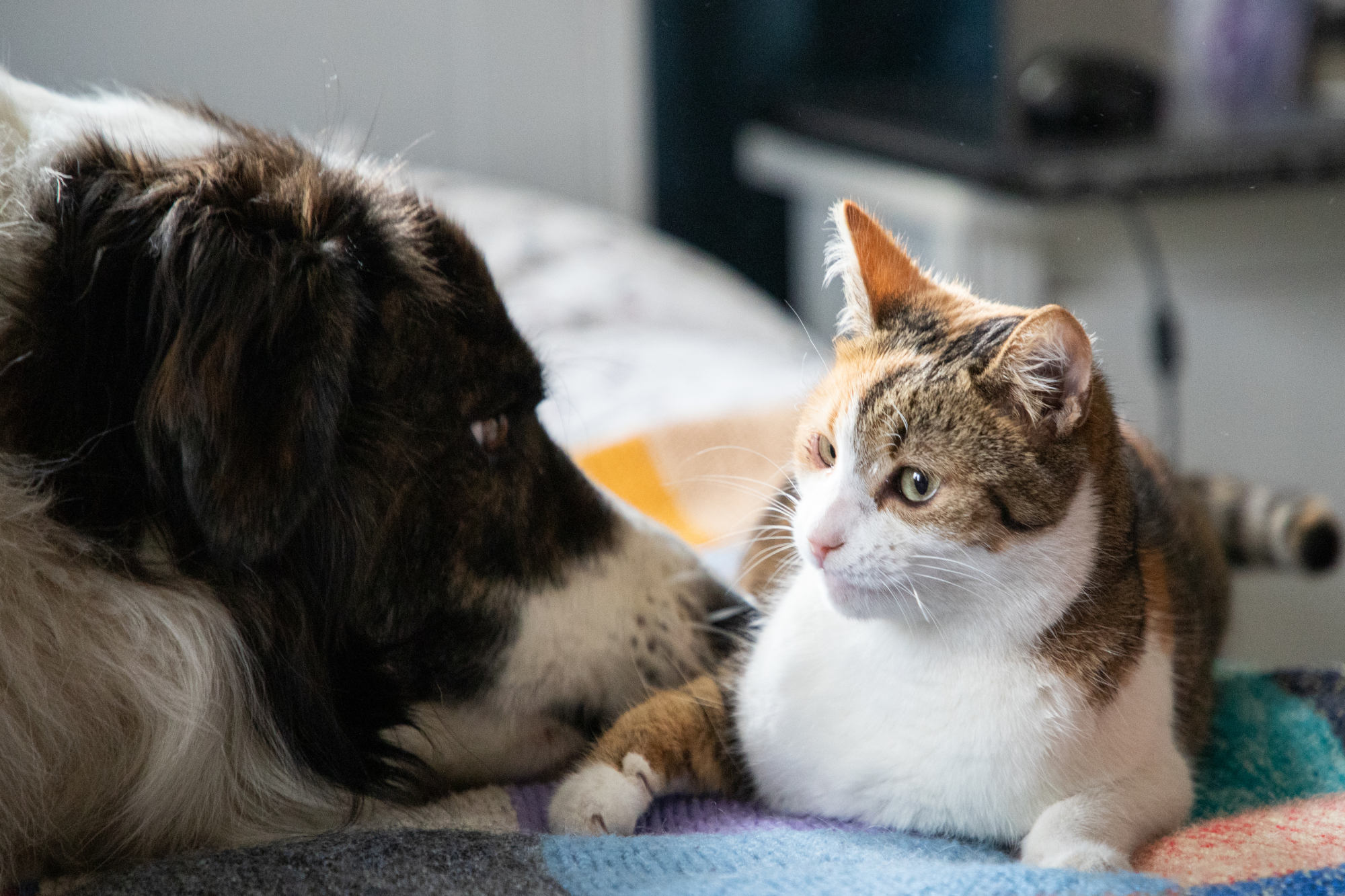
Halloween is a lively time of year, however the extra activity can sometimes be overwhelming for our pets. By understanding how they perceive the holiday’s unique sights and sounds, such as costumed visitors or trick-or-treaters, you can easily adjust their environment to keep them feeling secure.
Potential Pet Health Hazards to Be Aware Of
Stress and anxiety are among the most common concerns at this time of the year. Cats and dogs can both be sensitive to loud noises and raised noise levels, which tend to increase in volume this time of year. On top of this are the addition of strange new sights and smells, often in the form of excited children and costumes, which can be confusing and even alarming to pets.
Signs of stress and anxiety in pets include:
- A tucked away tail
- Shivering or trembling
- Drooling
- Increased vocalization (e.g. growling, hissing, barking)
- Pacing/restlessness
- Hiding
- Licking lips
- Ears flattened back against the head
- Whitened eyes or dilated pupils
If you’re concerned about noise phobia and your pet’s temperament, speak with your veterinary team. They can discuss options to help your pet stay calm as you prepare for the holiday.
Common Dog Health Hazards:
- Halloween candy. Examples include sugar-free candies and gum that contain xylitol, chocolate, hard candies and candy wrappers, lollipop and lollipop sticks, and raisins (chocolate-coated or otherwise).
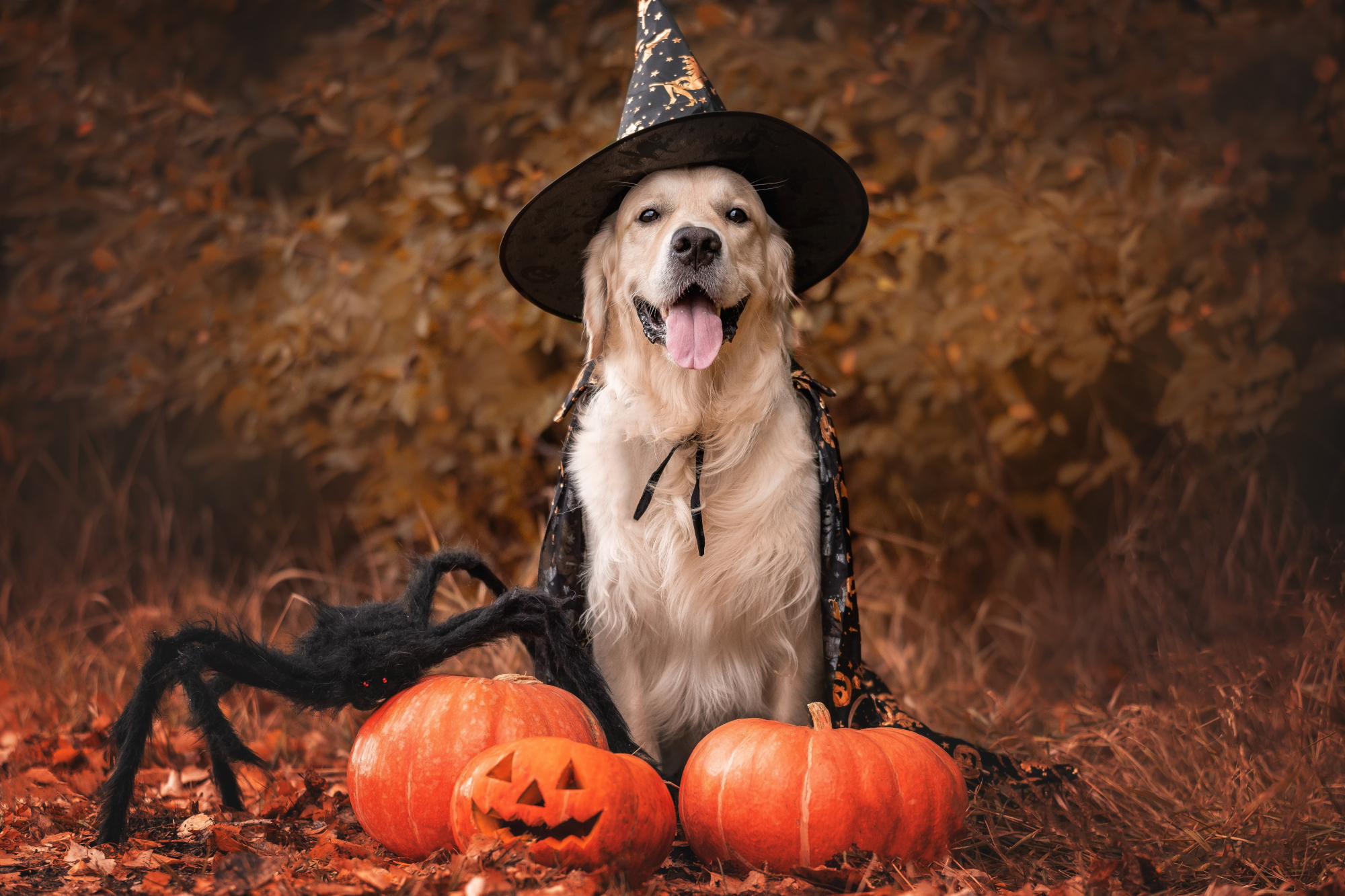
- Costumes. Not every dog enjoys being dressed up, even if the costume is a Halloween-themed bandana or similar. Other costume-based materials, such as elastic bands, can be uncomfortable and restrictive to dogs.
- Outdoor decorations. Examples include real pumpkins with lit candles, decorative cobwebs, and plastic skeletons.
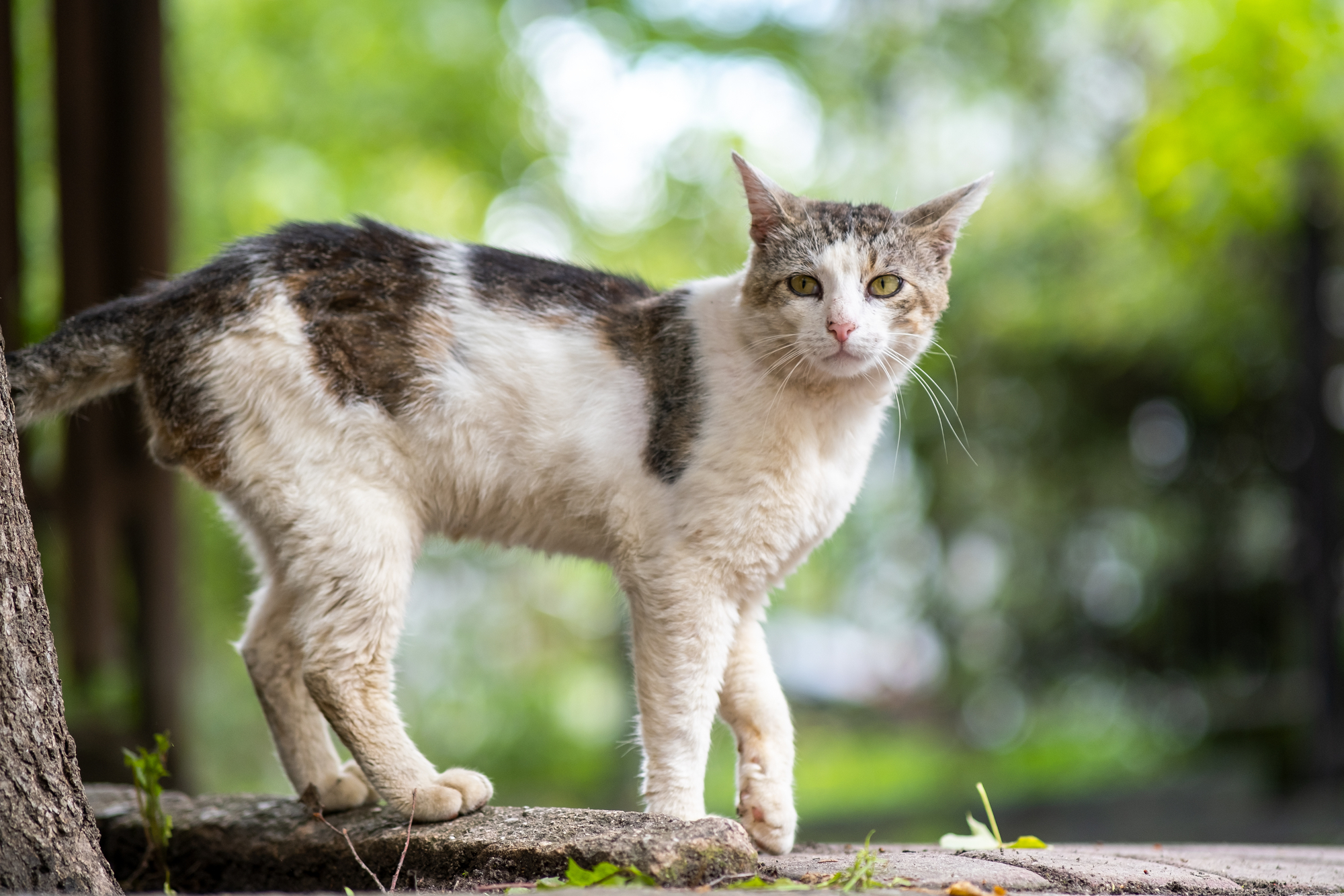
Common Cat Health Hazards:
- Costumes. Cats tend to be more averse to costumes, even if they look cute in them. Even a small hat can be a hard ‘no’ from some cats.
- Indoor decorations. Fake spiderwebs and hanging decorations can be tempting toys for cats if strings or dangling objects are their preferred ‘prey.’
- Outdoor visibility. Cats are harder to spot at night, which increases their risk of accident or getting lost if they slip outside.
What Pet Owners Can Do
- Create a private, quiet space in your home for your dog or cat to retreat to when it’s noisy or if you’re anticipating a lot of guests. Even if your pet doesn’t mind socializing with others, it’s good to give them this space whenever they need a break.
- Create a designated safety plan to prevent pets from escaping outside. Setting up a temporary pet gate near the front door or keeping your dog or cat in a secure back room ensures they stay safely indoors. This is also a good time to double-check that your pet’s microchip details and ID tags are up to date.
- Avoid dressing up your pet at all if it does not care for it. If your pet does consent to costumes, only dress them in comfortable ones that don’t restrict their movement or hinder their senses of smell, sight, and hearing. If you would like more tips on the subject, feel free to read our blog post Pet Halloween Costume Dos and Don’ts.
- Keep all Halloween candy for humans out of reach and out of sight from your pets in a sealed container. If needed, gently remind your children to not share their treats with their pets. If you want, you can offer your dog or cat vet-recommended toys and safe treats so they can feel included in the festivities. If your pet does ingest Halloween candy —particularly anything containing xylitol or chocolate—contact your veterinary team or the nearest emergency clinic immediately.
- It’s easier to see potential hazards, such as Halloween candy wrappers, during the day instead of at night, so you may want to stick to daytime for your dog’s walk. In the event your dog does need to go outside at night, wear reflective gear to help improve visibility. Keep your dog on a shorter leash to prevent them from going near candy or litter on the ground and outdoor decorations such as jack-o-lanterns and hanging lights. If your dog’s temperament tends to be on the nervous side, it may be best to leave them at home and spend time doing quieter activities with them.
- Keep an eye not only on curious dogs around outdoor seasonal setups but also on curious cats around indoor decorations. It’s best to place real pumpkins with lit candles out of reach to prevent accidental tips, and keep decorative cobwebs or plastic skeletons high enough that they won’t be chewed on or get tangled.
- If necessary, ask a neighbour or friend to help keep an eye on your dog or cat. This can help if you’re expecting the front door to open frequently or to entertain lots of people for the occasion.
- As a standard best practice for any holiday, save your veterinary team’s phone number and the contact details of the nearest local emergency clinic in your phone. Having this information readily available is a simple way to ensure peace of mind so you can relax and enjoy the evening.
If you feel you may need further assistance with caring for your pet before Halloween, you can check out our ultimate Halloween care guide for cats and dogs here.
Creative Commons Attribution: Permission is granted to repost this article in its entirety with credit to Hastings Veterinary Hospital and a clickable link back to this page.